


Seagate
Seagate ST3300655LC – 300GB | Ultra320 SCSI 80-Pin | 15K RPM | 3.5" | Enterprise HDD
Brand New, Factory Sealed | In Stock | Bulk Orders Available
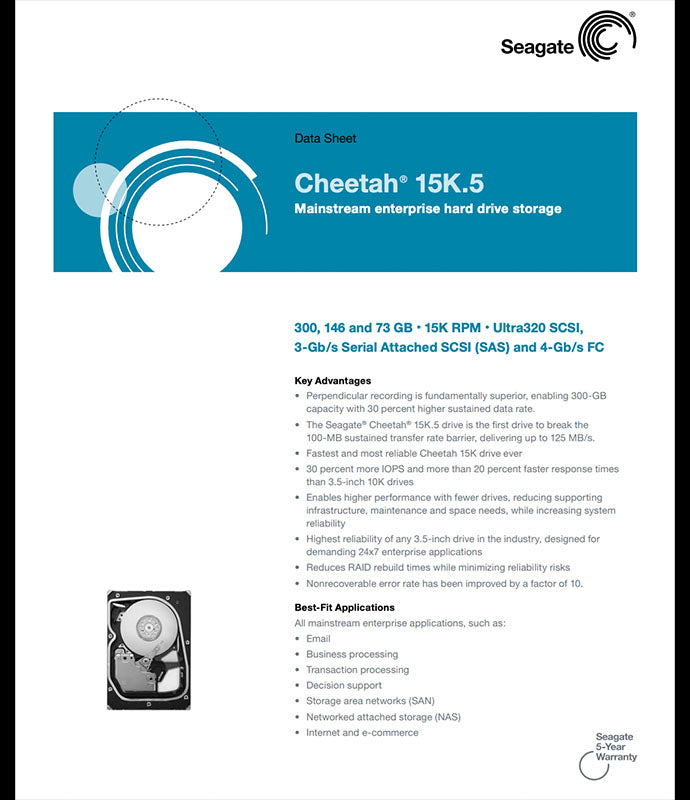
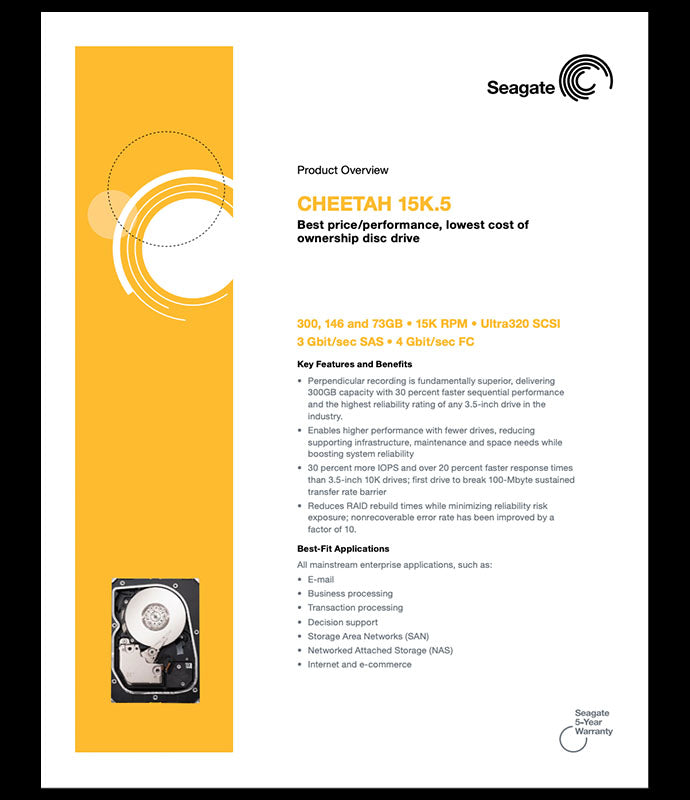
The ST3300655LC is a 300GB Ultra320 SCSI hard drive featuring 15,000 RPM, 16MB cache, and 3.5ms average seek time in a 3.5" form factor. Built for enterprise storage systems demanding high performance, it is ideal for mission-critical applications, database servers, and high-transaction environments. Compatible with SCSI hot swap trays and enterprise storage controllers. This Cheetah 15K.5 series drive was the first to break the 100MB sustained transfer rate barrier, delivering up to 125MB/s performance.
All products from Anand International ship brand new and factory sealed. Volume and B2B pricing available for qualified buyers.
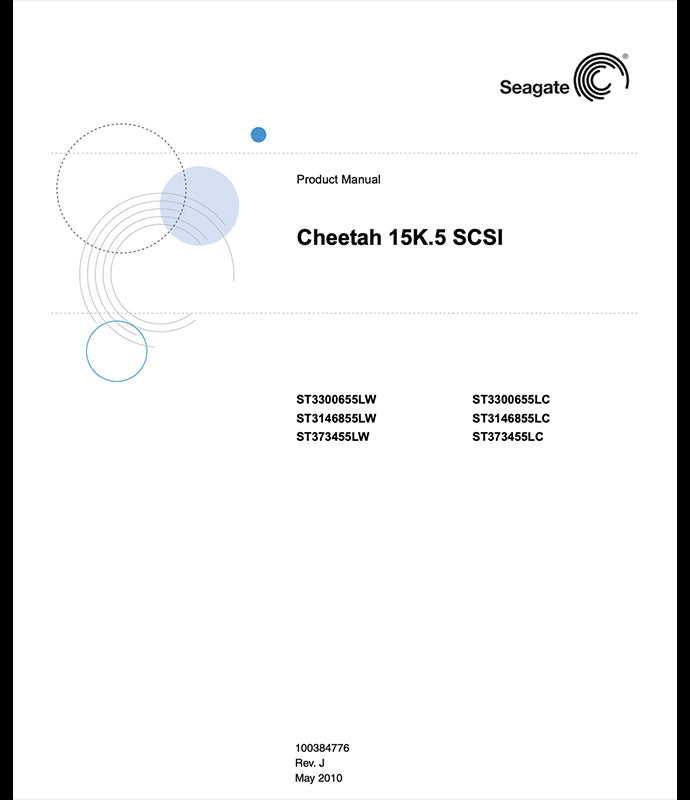
Related SCSI parts from Anand International: Seagate ST373455LW, Seagate Cheetah 15K.5 ST3146855LW, Seagate ST39216N, IBM DCAS-32160. All brand new, factory sealed, in stock with bulk & B2B pricing.
Specifications
Product Features
Compatibility
Shipping & Returns
- Free Shipping: We currently offer free Economy Shipping within the continental U.S. with no minimum order required. Expedited shipping is available at standard carrier rates.
- Same-Day Shipping: Order placed before 2PM PST will ship the same day. Orders received after this time will ship the following business day.
- Hassle-Free Returns: If you're not completely satisfied with your purchase, simply return it within 10 days for a hassle-free refund or exchange.
300GB Ultra320 SCSI 15K RPM Enterprise Performance Factory Sealed
Ultra320 SCSI High-Speed Interface
15K RPM Maximum Performance
Enterprise-Grade Reliability
Perpendicular Recording Technology
New Old Stock with 90-Day Warranty
Frequently Asked Questions
Frequently asked questions for SCSI, including information on usage, configuration, and compatibility.
1. What is a SCSI hard drive?
A SCSI (Small Computer System Interface) hard drive is a legacy enterprise storage device that connects using parallel ribbon cables. SCSI was widely used in servers, workstations, and storage arrays before newer technologies like SAS and SATA became standard.
2. What systems are SCSI hard drives compatible with?
SCSI drives are designed for older servers, RAID controllers, and storage arrays that have SCSI interfaces. They are commonly used today to maintain or repair legacy IT infrastructure.
3. What’s the difference between SCSI and SAS?
SCSI uses parallel communication and bulky ribbon cables, with speeds up to 320 MB/s. SAS (Serial Attached SCSI) is the modern successor, offering serial communication, smaller connectors, dual-port redundancy, and speeds up to 24 Gb/s.
4. Can SCSI hard drives still be used in modern systems?
Most modern computers don’t have SCSI ports. To use a SCSI drive, you’ll need a compatible SCSI controller card or an external enclosure designed for parallel SCSI.
5. What capacities are available for SCSI hard drives?
SCSI hard drives were typically available in capacities ranging from a few gigabytes to several hundred gigabytes. Larger capacities are rare compared to modern SATA and SAS drives.
6. Are SCSI hard drives hot-swappable?
Yes, many SCSI drives used in enterprise servers were hot-swappable when paired with a compatible RAID backplane or enclosure. This allowed replacement without shutting down the system.
7. Why are SCSI hard drives still used today?
SCSI hard drives remain important for maintaining legacy servers, specialized equipment, and industrial systems where upgrading to newer storage technologies isn’t possible or practical.


